
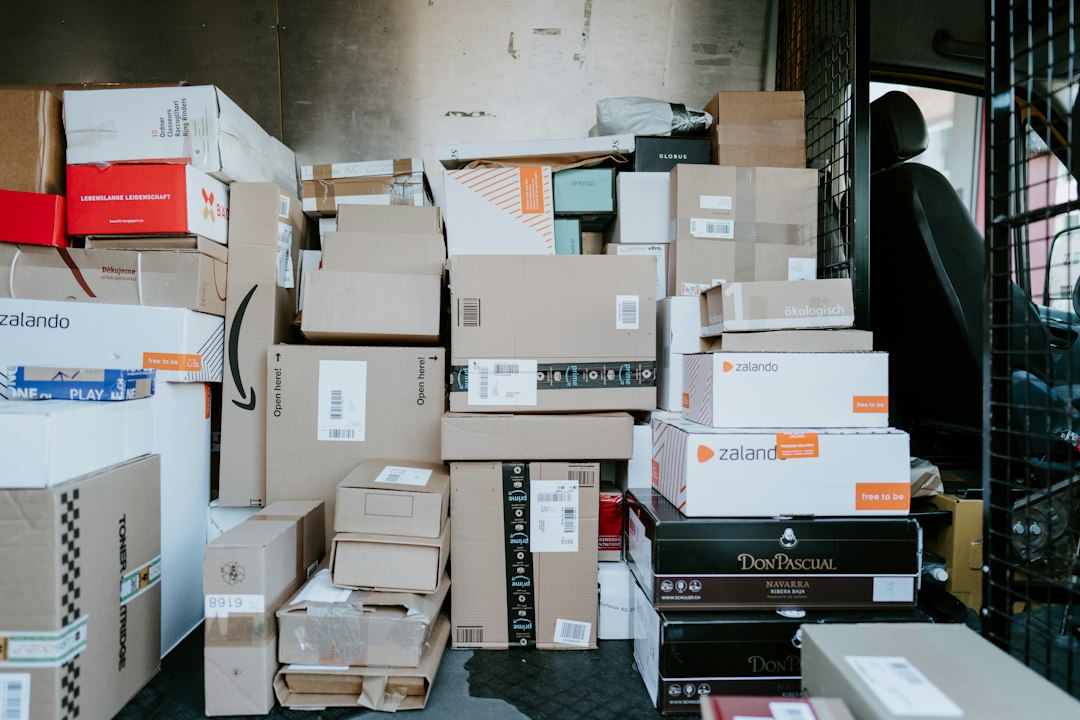
For nursery operators expanding into direct-to-consumer sales, shipping live plants presents a unique set of packaging challenges. A successful shipper must contain a moist root ball without spillage, protect delicate foliage and stems from compression, allow for gentle watering if needed, and withstand the rigors of last-mile delivery, all while managing dimensional weight and material costs. This guide details the corrugated engineering principles and material specifications necessary to achieve these goals, drawing on 25 years of packaging expertise serving California's manufacturing and agricultural sectors.
1. Core Engineering Challenges in Plant Shipping
The primary failure points in plant shipping are root ball destabilization, foliage damage, and moisture loss. A standard RSC (Regular Slotted Container) is insufficient. The packaging system must be treated as a integrated unit: the box, internal supports, and sometimes a separate pot or liner.
Root Ball Containment and Stability
The root ball and its surrounding soil are dense, heavy, and shift-prone. During handling, drops, or tip-overs, this mass can break through the bottom or sides of an under-spec'd box, causing catastrophic failure. The key metric here is Edge Crush Test (ECT), which measures the stacking strength of the corrugated board's vertical flutes.
Top Protection and Compression Resistance
Delicate stems, flowers, and leaves extending above the pot are vulnerable to compression from boxes stacked above in a delivery truck. This requires box designs with reinforced tops or internal structures that create a "protected zone."
Moisture Management and Ventilation
While retaining moisture for 5-7 days in transit is critical, complete sealing leads to mold, mildew, and root rot. The design must balance humidity retention with sufficient breathability.
2. Material Specifications: ECT, Flutes, and Board Combinations
Selecting the right corrugated medium is the first step. The following table outlines common specifications for nursery shipping, from small succulents to larger shrubs.
| Plant Size/Weight | Recommended Board Spec | Flute Profile | Key Rationale |
|---|---|---|---|
| Small (Succulents, 4" pots, <5 lbs) | 32 ECT, 200# Test | B-flute or E-flute | B-flute offers good puncture resistance for sharp soil edges. E-flute provides a smoother printing surface for branding with adequate strength for light loads. |
| Medium (1-3 Gal, 5-15 lbs) | 44 ECT, 275# Test | C-flute or B/C Double Wall | C-flute is the industry workhorse, offering an excellent balance of cushioning, stacking strength (ECT), and crush resistance. For heavier, wetter soil, B/C double wall is superior. |
| Large (5 Gal+, 15-30+ lbs) | 48 ECT or higher, 350# Test | B/C Double Wall or A-flute | Double-wall board is non-negotiable for heavy, shifting root balls. A-flute provides exceptional vertical compression strength for very tall boxes protecting small trees. |
3. Structural Design Solutions for Common Failure Points
Beyond material, the box design itself must address specific vulnerabilities.
Bottom Reinforcement and Locking Mechanisms
A standard box bottom is a weak point. Solutions include:
- Automatic Bottom (AB) or 4-Corner Bliss Style: These designs feature interlocked flaps that distribute the root ball's weight across multiple seams, significantly reducing the chance of blow-out.
- Full Overlap Slots (FOL): The bottom flaps fully overlap, creating a double-thickness layer of board. This is often used with heavier plants.
- Integrated Corrugated Trays: A separate, form-fitting tray cradles the pot, absorbing shock and containing any incidental water drainage.
Top Protection Designs
To protect foliage:
- Die-Cut Internal Supports: Corrugated inserts with finger-like extensions or a collar that suspends from the box walls, creating a cage around the plant's crown.
- Telescoping Design (Full Telescope Box): A two-piece box where the top fully sleeves over the bottom. This allows for a tall void space above the plant while maintaining structural integrity for stacking.
- Ventilation/Watering Access Panels: Strategically placed die-cut holes or perforated panels near the top allow for air flow and, if necessary, a spout to add water without opening the box.
4. The Moisture Balance: Barriers, Liners, and Breathability
Achieving 5-day moisture retention often requires a secondary component. The goal is to contain humidity around the root ball without creating a sealed, anaerobic environment.
- Polyethylene Bag Liners: A common solution. A perforated PE bag is placed over the pot before boxing. The perforations allow minimal gas exchange while drastically reducing moisture loss. Ensure bag sizing prevents loose plastic from smothering foliage.
- Wax or Polymer Coatings: A light spray or curtain coating on the interior corrugated board can repel incidental moisture from soil spillage, preventing box weakening. This is not a full moisture barrier but protects box integrity.
- Absorbent Pads: Placed beneath the pot, these pads (often made of recycled pulp) absorb excess drainage and slowly release humidity, while also preventing pot movement.
5. Integration with Last-Mile Carrier Requirements
Your perfect plant box is useless if it's rejected by a carrier for dimensional weight (DIM) violations or lacks proper labeling.
- DIM Weight Optimization: Carrier costs are based on package volume (LxWxH/divisor). A telescoping design that is shipped semi-assembled can reduce shipped volume. Work with your packaging engineer to minimize empty space without compression.
- Orientation Labels: "This Side Up," "Live Plant," and "Fragile" labels (though often ignored) are standard. More critical are "Keep from Heat" and "Do Not Stack" labels for sensitive shipments.
- Compatibility with Automation: Ensure barcodes are placed on a flat, non-curved surface and are not obscured by seams or die-cuts to prevent scanning failures at distribution hubs.
6. Prototyping and Testing for Your Specific Product Line
Before committing to a full production run, a rigorous testing protocol is essential.
- In-House Transit Simulation: Conduct simple drop tests from 36 inches (approximate belt-to-floor height) onto the box corners and edges. Observe root ball settlement and box integrity.
- Compression Test: Stack weighted boxes equivalent to a 5-high pallet load for 48 hours. Check for top panel deflection pressing on plants.
- Moisture Retention Trial: Package a representative plant, weigh it, and store it in a warehouse environment for 5 days. Re-weigh to measure moisture loss.
- Formal ISTA Testing: For significant volume, consider ISTA Project 3A or 6-AMAZON.COM tests to simulate parcel shipping environment. This data validates your design and can reduce carrier claims.
Prototyping is a core service in our product development process. We work with you to iterate designs based on physical test results, not just theory.
Conclusion: From Single SKU to Pallet-Scale Efficiency
Engineering a successful plant shipping program starts with understanding the biomechanical stresses on your specific product. Begin with material specs (ECT, flute), then apply structural designs (reinforced bottoms, top protection) to address failure points. Finally, integrate moisture management and carrier compliance.
For California nurseries shipping at pallet-scale (MOQ 1,000+ units), the cost efficiency of a custom, optimized design is realized quickly through reduced damage rates, lower return costs, and enhanced customer satisfaction. The goal is a box that arrives looking as vibrant as the plant inside.
For readers with lower volume needs, our sister brand, Build A Box Online, offers short-run and no-MOQ solutions for prototyping or small-batch e-commerce.
To begin engineering your solution, submit your specifications and requirements via our RFQ form. Our team will analyze your needs and provide a quote for a corrugated system designed for stability, moisture retention, and safe arrival.