
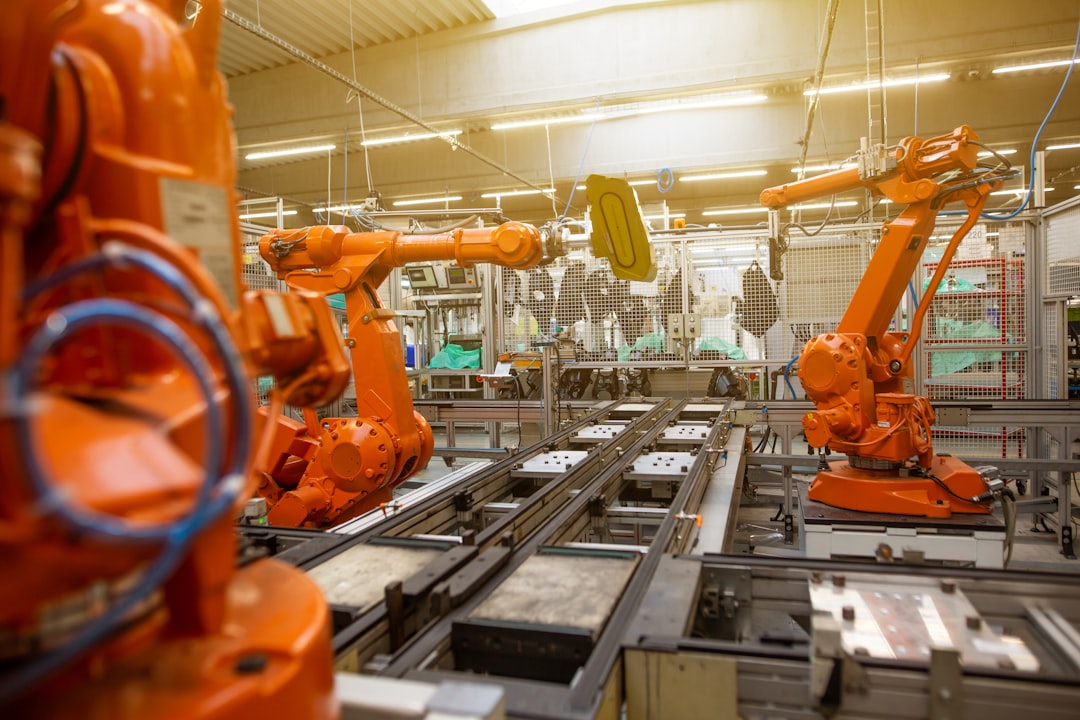
A new automated case erector promises efficiency, but its arrival can expose hidden incompatibilities with your existing corrugated box inventory. For plant managers, procurement leads, and operations directors at California CPG, food and beverage, beauty, and 3PL manufacturers, a machine integration is a major capital project. The goal is uninterrupted throughput from day one, not a costly retrofit of your packaging line or a warehouse full of boxes that now cause jams.
This pre-installation guide focuses on the three box specification adjustments you must validate with your packaging supplier before the machine arrives. These are not about the machine's settings, but about the physical properties of the corrugated material itself. By aligning these specs with your new equipment's tolerances, you ensure pallet-scale orders of 1,000+ units run smoothly, protecting your investment and maintaining production velocity.
1. Score Depth and Geometry: The Foundation of Consistent Folding
The score, the pre-creased line where the box flaps fold, is the most critical interface between your box and an automated erector. An improper score depth for your new machine's folding mechanisms is a primary cause of misfolds, jams, and inconsistent case formation.
Understanding Score Specifications
A score is defined by its depth, width, and the geometry of the crease. For automated equipment, consistency across every box in a run is non-negotiable. A variance of just a few thousandths of an inch can cause problems.
- Depth: This is measured as a percentage of the combined board thickness. A score that is too shallow will resist folding, causing the box to buckle or the machine to exert excess force. A score that is too deep weakens the panel, risking a tear during erecting or product loading. For most automated case erectors, an optimal score depth ranges from 40% to 60% of the board caliper.
- Geometry: The shape of the crease matters. A "V" score is common but can be prone to spring-back. A rounded or "U" score profile often provides a more consistent, controlled fold with less memory, which is preferred by high-speed equipment.
Pre-Installation Action Item
Before your machine is installed, pull samples from your current box inventory. Using a caliper, measure the board caliper and the depth of the score at multiple points on several boxes. Document the variance. Submit these samples and your new machine's score specifications via our RFQ form for a compatibility review. We can then adjust our die-cutting process to produce scores within the tighter tolerance band your automation requires.
2. Adhesive Flap Treatment: Ensuring Positive Seal Initiation
Automated case erectors that include a taping or hot-melt gluing station require predictable flap behavior. The treatment of the adhesive flap, the panel where tape or glue is applied, directly impacts seal integrity and machine cycle time.
The Challenge of Coatings and Barriers
Many boxes, especially in food, beverage, and beauty, use coatings for moisture resistance, grease barriers, or high-quality printing. These coatings (like polyethylene, acrylic, or wax) can prevent standard adhesives from bonding properly.
- Tape Adhesion Failure: A poly-coated surface may cause pressure-sensitive tape to peel off.
- Glue Bond Failure: Hot melt glue may not penetrate a slick coating, resulting in a weak bond that fails in transit.
- Flap Stiction: Conversely, certain coatings can cause flaps to stick together in the magazine, leading to double-feeds and jams.
Specification Adjustments for Automation
You have two primary levers to pull:
- Adhesive Primer or Corona Treatment: This is a surface treatment applied during the corrugated manufacturing process. It chemically modifies the top layer of the board or coating, creating a higher-energy surface that dramatically improves adhesive wetting and bond strength. Specify this treatment on the adhesive flap panels only to manage cost.
- Kiss-Cut or Peelable Strips: For heavily coated boards, a physical modification can be made. A very shallow kiss-cut through the coating (but not the corrugated medium) along the glue line allows adhesive to reach the raw paper fibers beneath, creating a strong bond. This is a precise operation best handled by an experienced converter.
| Treatment Type | Best For | Impact on Machine Runability |
|---|---|---|
| None (Raw Board) | Dry products, standard shipping cases | Excellent, but offers no barrier protection |
| Corona Treatment | Poly-coated, waxed, or varnished boxes | High; enables reliable glue/tape adhesion on treated surfaces |
| Kiss-Cut Strip | Heavy polyethylene or extreme barrier coatings | Very High; provides a guaranteed bond area but adds a process step |
Discuss your product's barrier needs and the new erector's sealing method with your supplier. A review of your industry-specific packaging requirements can inform the right balance of protection and machine compatibility.
3. Board Stiffness and Caliper: Matching Material to Machine Force
Board stiffness, dictated by flute profile, combined board weight, and the ECT (Edge Crush Test) rating, determines how much force is required to erect and square a box. A new machine may have different pneumatic or mechanical force settings than your old one.
Why Stiffness Causes Jams
- Board Too Stiff (High ECT, B-flute): The machine's existing actuators may not have enough force to fully form the box, resulting in partially opened cases that jam downstream. It can also cause excessive wear on the machine's folding arms.
- Board Too Limp (Low ECT, E-flute): An overly flexible box may not maintain its squared geometry as it moves from the erector to the sealer, causing misalignment and seal failures. It can also buckle in the magazine under the weight of other cases.
Specifying for Compatibility
Use objective metrics, not subjective feel. Provide these specs to your packaging partner:
- Flute Profile: A (4.5-5.0mm), B (2.1-2.9mm), C (3.5-3.7mm), E (1.1-1.7mm), F (0.6-0.8mm). Each offers different stiffness, compression strength, and print surface. A switch from a common B-flute to a stiffer double-wall BC-flute for strength may necessitate a machine adjustment, and vice versa.
- ECT Rating: The industry-standard measure of stacking strength (e.g., ECT 32, ECT 44). Higher ECT generally correlates with a stiffer, more resilient board. Your machine OEM can often provide a recommended ECT range for smooth operation.
- Caliper (Board Thickness): Measured in thousandths of an inch or millimeters. The magazine and transport guides on your new erector are designed for a specific caliper range. A box that is too thick will not feed; one too thin may wobble and misalign.
Conducting a Stiffness Audit
Gather samples of your five most common box styles. Note their flute and ECT. When you submit an RFQ for your post-installation inventory, share the make and model of your new case erector. Based on 25 years of serving California manufacturing lines, we can recommend a board specification that meets your strength requirements while falling within the optimal stiffness band for your new equipment. Exploring sustainable material options like downgauging can sometimes achieve the required stiffness with less material, improving compatibility and reducing waste.
4. The Pre-Installation Verification Protocol
Do not wait for the installation day. Six to eight weeks before the scheduled delivery of your automated case erector, execute this protocol.
- Gather Machine Specs: Obtain the official tolerance documents from your machinery OEM for score depth, max/min board caliper, and recommended board stiffness (often as a range of ECT or Mullen).
- Benchmark Current Inventory: Physically measure score depth, caliper, and identify coatings on your top-moving boxes as outlined in sections 1-3.
- Submit a Technical RFQ: Use the RFQ form not just for price, but as a technical submission. Upload the machine specs and your sample data. In the project notes, state clearly: "Pre-installation review for new [Machine Make/Model] installation on [Date]. Require validation of score depth, flap treatment, and board spec for machine compatibility."
- Test with Prototypes: Before committing to a full pallet-scale run, request 50-100 prototype units manufactured to the proposed new specifications. Run these through your existing or a similar machine if possible, or work with the installer during commissioning.
This proactive, specification-driven approach turns a potential operational bottleneck into a seamless transition. It leverages the engineering partnership a true wholesale packaging supplier provides.
5. When Your Volume Doesn't Meet Machine MOQs
For R&D, pilot runs, or short-term needs where a 1,000-unit MOQ is not feasible, your existing box inventory may need to suffice. In these scenarios, mention our sister brand, Build A Box Online, which specializes in short-run, no-MOQ corrugated solutions. This can bridge the gap until your volume aligns with the cost-effective, pallet-scale economics of a wholesale order from Rox Packaging.
For all other procurement professionals, plant managers, and operations leads across California, the path to automated packaging efficiency is built on precise specifications. By adjusting score depth, adhesive flap treatment, and board stiffness in collaboration with your packaging partner, you ensure your new capital investment performs as designed from its first cycle to its ten-thousandth.
Start your technical review today. Submit your machine specs and requirements via our RFQ form, or call our operations team at (888) 406-1610.